Aspa Coffee Table - 1970
Brand:
Luteca
The Aspa Coffee Table by Luteca, designed by Pedro Ramírez Vázquez, reflects a bold interpretation of modernist design shaped by subtle Aztec influences. Known for his mastery of typography and spatial composition, Its geometric metal base, formed through carefully folded planes, recalls the symmetry and structural logic found in Pre-Columbian architecture. Topped with glass, the composition highlights balance, shadow, and proportion, emphasizing the dialogue between structure and surface.
Please contact us at custom-made@thecollectional.com to explore further.


The Aspa Coffee Table by Luteca, designed by Pedro Ramírez Vázquez, reflects a bold interpretation of modernist design shaped by subtle Aztec influences. Known for his mastery of typography and spatial composition, Its geometric metal base, formed through carefully folded planes, recalls the symmetry and structural logic found in Pre-Columbian architecture. Topped with glass, the composition highlights balance, shadow, and proportion, emphasizing the dialogue between structure and surface.
Please contact us at custom-made@thecollectional.com to explore further.
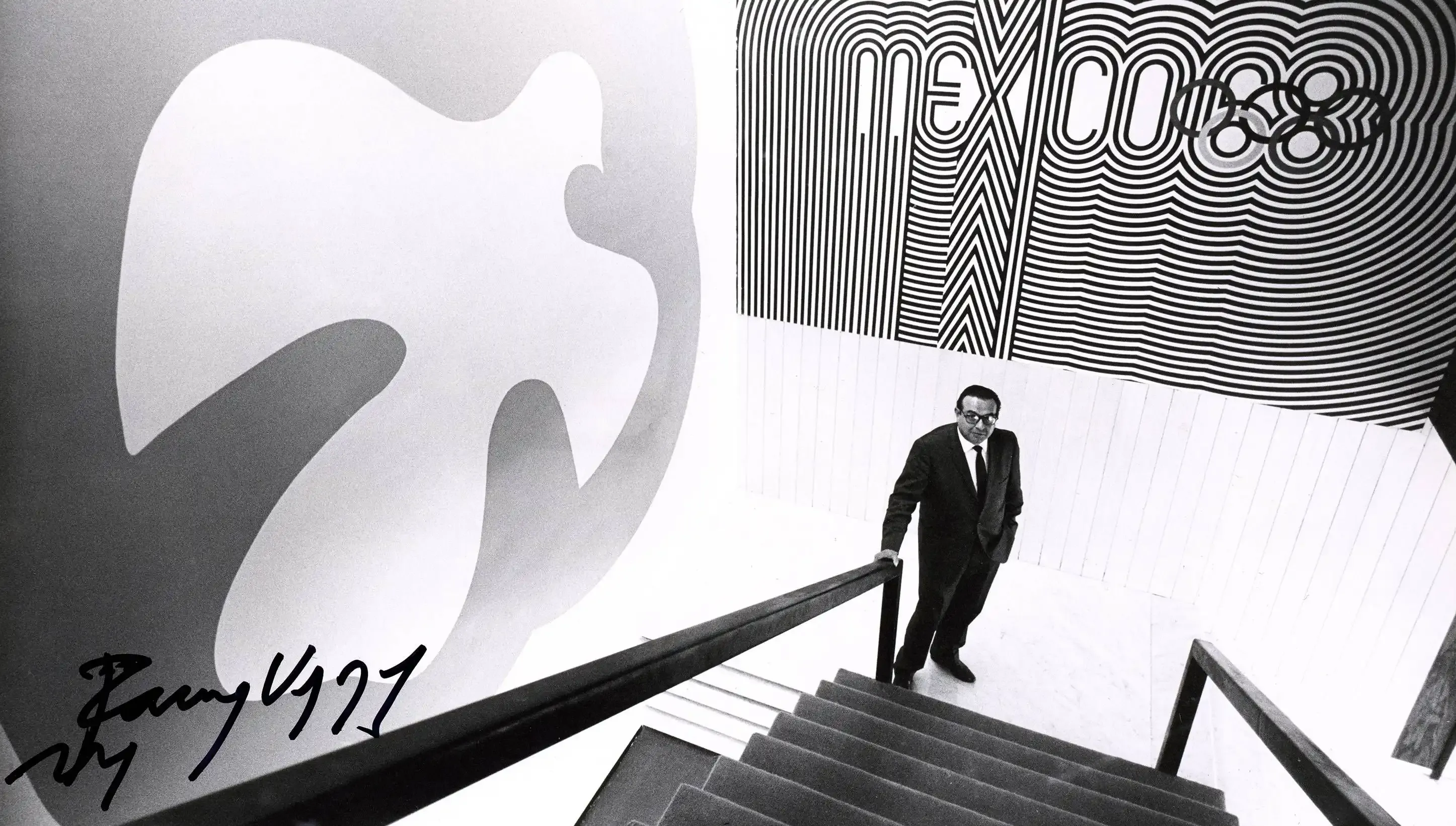
Pedro Ramírez Vázquez
Mexican architect, urban planner, and designer
Pedro Ramírez Vázquez was a Mexican architect, urban planner, and designer whose fusion of European modernism with pre‑Columbian forms made him one of the most influential figures in twentieth‑century Mexican design.
He first gained national attention through a series of prefabricated rural schools developed under the mentorship of Jaime Torres Bodet. The project won the Grand Prix at the 1960 Milan Triennale and was later adopted by UNESCO in seventeen countries. His practice expanded rapidly across architecture, urban planning, industrial design, and public administration, all guided by his belief in Mexico’s “cultural constants”, the iconographic and spatial principles of pre‑Hispanic tradition that he saw as essential to an authentic modern Mexican identity.