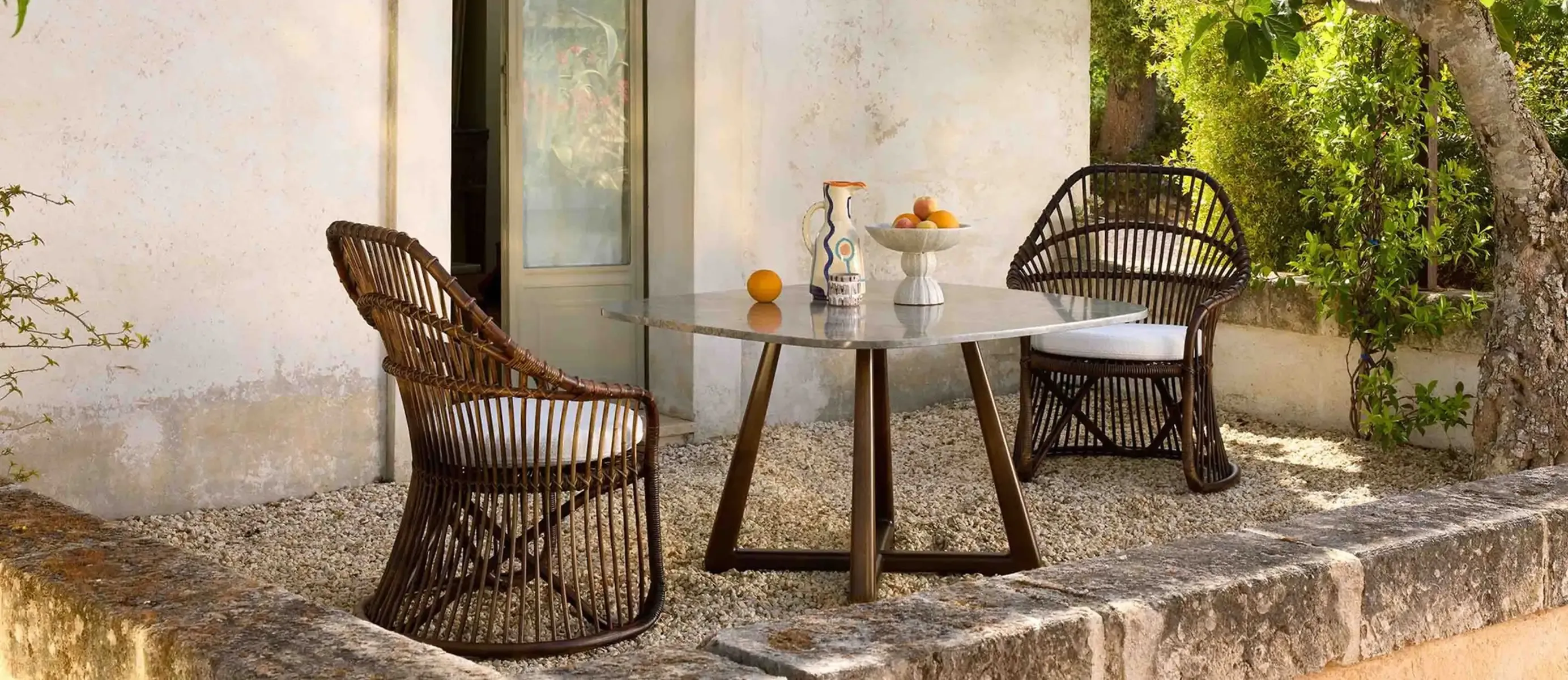
Martingala Lounge Chair - 1959
Brand:
Exteta
The Martingala Lounge Chair - 1959 pays tribute to Marco Zanuso’s iconic 1950s designs, echoing the elegance of Italian mid-century style.Crafted in rattan using thermo-bending techniques, it offers natural flexibility and durability. Available in two finishes: a timeless natural hue or a deeper barrique tone.
Please contact us at custom-made@thecollectional.com to explore further.


The Martingala Lounge Chair - 1959 pays tribute to Marco Zanuso’s iconic 1950s designs, echoing the elegance of Italian mid-century style.Crafted in rattan using thermo-bending techniques, it offers natural flexibility and durability. Available in two finishes: a timeless natural hue or a deeper barrique tone.
Please contact us at custom-made@thecollectional.com to explore further.
Marco Zanuso
Italian architect, designer, and educator
Marco Zanuso, an Italian architect, designer and educator whose career spanned over six decades, worked with industrial materials and manufacturing processes to redefine the concept of what was considered good design to include functional design as a means to enhance the human experience.
Zanuso was born in Milan and studied architecture at the Politecnico di Milano, graduating in 1939. After serving in the Italian Navy during the Second World War, he opened his own design office six years later. He was active in shaping the discourse around modern design, serving as co-editor of Domus for two years, and of Casabella a bit later.
He claimed his inquisitiveness to be a driving factor behind all his discoveries - the first of which was small, stackable plastic chair. Zanuso maintained that design was intended accessible for everyone, he first gained international attention when his works were exhibited at the Low-Cost Furniture competition at the Museum of Modern Art - the same year Arflex commissioned him to design their first models.
He was a founding member and first president of the Associazione per il Disegno Industriale (ADI) in 1954, and taught architecture, design and urban planning at the Politecnico di Milano throughout most his life.